
We have developed an approach to help those facilitating babies’ outdoor experiences to think about how they offer opportunities that both engage babies with nature but also enhance the outdoors with nature. We call this babyNENE (nature engaging and nature enhancing). We have worked with babyroom educators, Derbyshire Wildlife Trust and an advisory group of specialists in pedagogies for babies and outdoor pedagogies to develop this approach.
babyNENE is made up of four qualities – being attentive, responsive, nurturing and questioning.
Our babyNENE framework explains how these four qualities can form the basis for engaging babies with nature and for enhancing the outdoors with nature.
| Nature Engaging Practices | Quality | Nature Enhancing Practices |
|---|---|---|
| Be attentive to what babies are interested in, follow their lead and tune in to natural processes and cycles (weather, light, seasons etc.) and the engagement opportunities these might offer, including what could be learnt from these processes. | Attentive | Do attend to what can be offered, rather than what can be received from nature. |
| Be a nurturer of babies’ interest in natural environments, observing and valuing the connections they make, helping them to understand how everything links. | Nurturing | Do model nurturing behaviours outdoors, showing how to protect and care for both humans and more-than-humans, exploring what they need to flourish. |
| Be responsive to babies’ needs outdoors, value passive and slow ways of being outdoors to facilitate feeling, thinking, sleeping. | Responsive | Do respond to the needs of the more-than-human in the local environment, becoming familiar with its specific needs, creating wild spaces and increasing biodiversity. |
| Be a questioner, observing how babies from different cultural backgrounds engage outdoors and be prepared to disrupt dominant ideas of who belongs in nature. | Questioning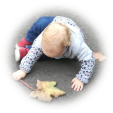 | Do question ideas about what counts as nature. |
People who look after babies are very busy people! We want to offer you an uncomplicated way to think about being outside with them, whether that be in the setting’s outdoor area, on a trip to the park or walking to the shops.
You might find it helpful to choose one of the words from the babyNENE framework to focus on for a few weeks. Think about how you can apply this word both to the children in your care and to the environment. You can see some ideas in the table below:
| Example of Nature Engaging Practice | Quality | Example of Nature Enhancing Practice |
|---|---|---|
| Babies were interested to explore fallen leaves by touching and crinkling them in their hands. The adult brought leaves inside to give them further opportunities to explore. | Attentive | Babies learnt in age-appropriate ways about looking after plants and animals within the setting. They watched the adult engaged in this work, listened to the adult describe what they were doing and joined in as they could. |
| The adult didn’t worry about outcomes (e.g. slow) or providing lots of resources but took their lead from the babies in terms of what they were interested in. For example, when walking to the beach, the adult didn’t rush to get there, instead they stopped every time the children showed some interest in their environment and talked to them about what they could see. | Nurturing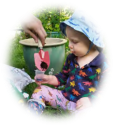 | The adults planned for growing, eating and composting edible plants, involving the babies as much as possible. |
| A setting provided cribs outdoors for babies to crawl into when they felt sleepy. | Responsive | The babies took breadcrumbs outside after snack time to leave for the birds. They looked in rock pools on the beach for signs of sea life. |
| A practitioner noticed how one baby didn’t like to go outdoors and asked the parents why they thought this might be the case. | Questioning | Practitioners in an urban setting stopped clearing weeds that came through the patio area – instead they left them for the babies to explore. |
 Babies Outdoors